Creatitive began because I kept noticing the same core problems in the fitness industry, not as a marketing test.Studio owners followed the usual advice: posting often, running ads, trying new offers, and staying active on different platforms. On the surface, things looked good. Marketing was busy, and leads were coming in.
But looking beyond the basic numbers, a different picture was shown. Growth was uneven. Decisions were made on the fly. Owners worked hard but didn’t feel confident about what was really making a difference.
Creatitive was started to close the gap between being busy and having clarity.
Why Most Fitness Marketing Fails
BFS industry research looked at 369 studios in different markets, giving a clear picture of how fitness businesses work today. One key finding: only about 17% of studios have profit margins of 20% or more, even though 58% are technically profitable.
In simple terms, many studios make money but have thin margins. They might look stable, but their growth relies on constant effort instead of reliable systems. If that effort drops, results usually drop too. You can think of it like this: most studios are keeping their heads above water, but only a small group is actually swimming with control.
| Brand-led marketing systems that help fitness and wellness studios build sustainable, profitable growth. Learn more about Creatitive>> |
The key issue isn’t just that this gap exists, but why. BFS data shows that being more active doesn’t always mean higher profits. What matters is how studios create, manage, and support demand in their operations.
Imagine two studios. One sees a steady flow of inquiries coming in each week. The other experiences occasional spikes followed by long, quiet periods. The first studio has options: it can prioritize follow-up, refine messaging, and plan staffing. The second studio is forced to react whenever interest appears.
The data reflects this difference in operating conditions, not effort or intent.
Making Sense of the Data
Data is easier to understand when you can picture what it represents.
The 2024 BFS State of the Industry Report says 58% of studios are technically profitable, but only 17% have profit margins of 20% or more. This means many studios make money, but not enough to feel secure, reinvest, or grow easily. As I mentioned earlier. Lead generation data adds more context. BFS reports that 45% of high-profit studios get 50 or more new leads each month, while only 14% of low-profit studios do. This doesn’t mean more leads always equal more profit, but higher-profit studios usually have steadier demand, giving them more options.
After talking with BFS, they confirmed that studios getting 50 or more leads a month and converting at least 30% into first-time visits are much more likely to be profitable. In these cases, 72% of studios made a profit, while 28% broke even or didn’t profit. This point matters. The lesson isn’t that more leads always mean more profit. Instead, having enough demand and good enrollment systems brings stability. Demand alone isn’t enough.
BFS also found that studios with conversion rates over 30% exist at all profit levels. This means higher-profit studios aren’t just better at converting; they have steadier demand and clearer processes.
The Ignite Fitness Example
Data shows directions, but real examples help people see how those trends work in practice. Ignite Fitness is a good example, not because it’s typical of every studio, but because it shows how having structure changes daily decisions.
Before making changes, Ignite had several locations and did a lot of marketing. Most interest came from social media, leading to many different types of inquiries. Some people were ready to join, others were just looking. Without clear signs of intent, the team treated most inquiries the same way.
The change wasn’t about doing more marketing. It was about making things clearer. We made a search, the main way people found them, since it showed active decision-making. The website was updated to guide visitors, not just give information. Tracking showed how prospects arrived, what they did, and how they moved toward signing up.
Examples of what the team could now see included:
- How prospects found the studio
- Which pages did they view before submitting an inquiry?
- How quickly they responded to the follow-up
- Where interest progressed or stalled
With this visibility, the team could focus its efforts where it mattered most, instead of spreading them out evenly.
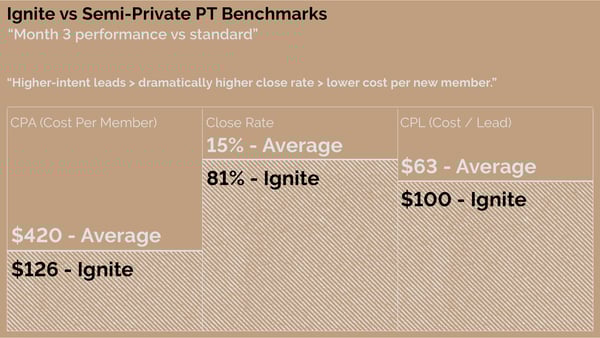
After three months, the results were clear in the case study:
- $1,500 in ad spend
- 12 new members enrolled
- 81% lead-to-member conversion rate
- Approximately $126 cost per acquisition
On average, Ignite’s members paid $350 to $400 per month, giving the team a clear way to make decisions. The point isn’t that every studio will see these numbers, but that having clarity lets the team act confidently instead of guessing.
Ignite doesn’t prove a theory. It shows how being aligned reduces uncertainty.
Connecting the Dots
When you compare the BFS industry data with some examples, a clear pattern emerges.
Studios that operate with:
- Sufficient and consistent demand
- Clear enrollment processes
- Operational support
They are better set up to grow steadily. This doesn’t guarantee profits, but it means they don’t have to rely on constant effort or quick reactions. In this context, marketing is an information system that helps teams see what’s happening and decide what to do next.
What This Means for Creatitive
As Creatitive has grown, we’ve seen that real growth is about making the right choices and acting with purpose. That’s why we’re narrowing our focus. We’re not limiting opportunities; we’re aiming to make a bigger impact. Our goal is to help studios understand demand, enroll with confidence, and build systems that last as they grow. When you remove uncertainty, growth becomes more predictable.
Studios that know who is ready, why people reached out, and how to respond don’t have to rely on gut instinct. They rely on structure. That’s the kind of growth that matters, and it’s exactly what Creatitive is here to support.
| FAQ’s
Does Getting More Leads Automatically Mean More Profit? Why Is Consistency In Leads Important? Why Does Having A Manager Or Structure Matter So Much? What Does “Understanding Demand” Actually Mean? What’s The Biggest Takeaway For Studio Owners? |